
South Africa cannot afford to leave its young professionals on the sidelines – CESA
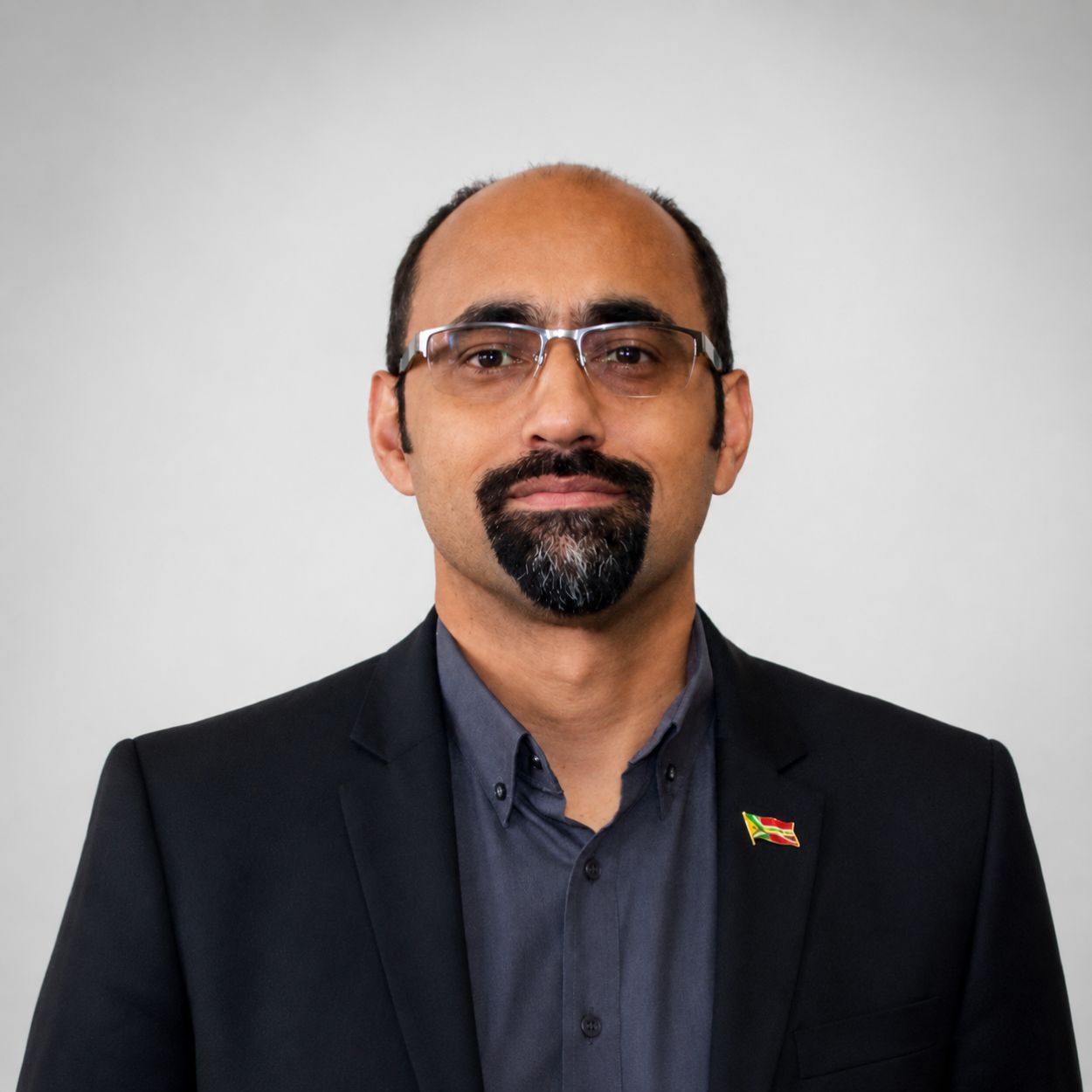

Feature images: Dr Vishal Haripersad (CESA President) / Marizel Pienaar (CESA YPF Chair)
South Africa cannot afford to leave its young professionals on the sidelines - CESA
South Africa’s unemployment crisis requires a deliberate effort to create meaningful opportunities for young professionals, particularly as the country faces an urgent need to strengthen its engineering capacity. This was the message from Consulting Engineers South Africa (CESA) during its 14th Young Professionals (YP) Sustainability Imbizo underway in Midrand over the next two days.
CESA President Dr. Vishal Haripersad explained that South Africa could not afford to leave a generation of young professionals on the sidelines while the country grapples with a deepening unemployment crisis and a shortage of engineering skills. “The challenge facing South Africa is not simply about getting more infrastructure built but ensuring that the process of building also creates the skills, experience and opportunities needed to sustain the country’s future.”
Haripersad pointed to South Africa’s unemployment figures, particularly among young people, as a crisis that extends well beyond economics. With youth unemployment remaining above 45% for those aged 15 to 34, he argued that even obtaining a degree is no longer a guarantee of a foothold in the labour market. “For young graduates, including engineers, the absence of opportunities, mentorship and practical experience can become a barrier between completing their studies and becoming active contributors to the economy.”
Against this backdrop, Haripersad said the country’s planned infrastructure investment presents an opportunity to tackle two challenges at once. Government has committed more than R1 trillion to public infrastructure over the next three years, but he cautioned that simply spending money on projects will not automatically deliver inclusive growth. “Instead, infrastructure investment should deliberately incorporate skills transfer, local content, artisan development and mentorship, so that projects build people alongside the physical assets they deliver,” he added.
Haripersad also highlighted the contradiction within South Africa’s engineering landscape: while the country faces a significant shortage of engineering professionals, some graduates and candidates are still waiting for opportunities and professional recognition. He argued that the profession cannot afford to sideline people who have already invested in developing the skills the country needs. “That is a crisis for South Africa. But it also means this: this profession cannot afford to sideline any of you,” he told young professionals attending the Imbizo.
CESA Young Professionals Forum (YPF) Chair Marizel Pienaar added that the responsibility for shaping the future of engineering also rests with the professionals entering and progressing through the sector. Speaking on “Engineering Africa’s Future Together: Connecting Leadership, Innovation, Sustainability and People”, Pienaar challenged young professionals to recognise the wider consequences of their professional decisions.
“As engineers, we are entrusted with decisions that impact communities. Our decisions also impact economies and generations to come. This means that we have a serious role to play, and we should not take that lightly,” said Pienaar.
She emphasised that young professionals should not view themselves simply as the future of the profession, but as active participants in shaping it today. “The future of engineering is not something that simply happens to us. It's something that we influence every day through the decisions we make, the conversations we lead, and the actions that we choose to take.”
Pienaar’s comments complemented Haripersad’s call for young professionals to take their place in the profession rather than wait for an invitation to do so. Haripersad urged delegates to build their technical capability and leadership, be open to mentorship and criticism, understand their professional value and take an active role in branches, committees and forums that shape the engineering profession. They both presented during a session: “Sustaining the Future of Engineering,” facilitated by Itumeleng Sethlabane.
The message formed part of a broader programme exploring the challenges and opportunities that will shape the future of engineering and the built environment at the YP Sustainability Imbizo. The first session, “Sustaining the Future of Engineering”, set the tone for the Imbizo by placing engineering governance, public accountability, leadership and the profession’s future firmly on the agenda.
The programme then moved into “Leadership, Innovation & Ethics for a Future-Ready Built Environment”, examining the skills and approaches required to navigate a changing industry, which was facilitated by Ashlan Ganass, Chair of the CESA YPF in KwaZulu-Natal and Civil Engineering Technologist at JTN Consulting. Ntombi Nyaga, Chief Operations Office of the Construction Industry Development Board, explored leadership, innovation and ethical excellence, while Victor Chibaya, Chair of the South African Institution of Civil Engineering’s Future Leaders Panel, considered how artificial intelligence is transforming engineering. Khutso Mokgehle, Education Manager at the South African Council for the Project and Construction Management Professions, focused on the journey from qualification to professional registration and the importance of building a competent and ethical construction workforce.
The YP Sustainability Imbizo also considered the sustainability and resilience challenges facing the sectors in which young professionals will work. Under “Engineering for Sustainability, Survival & Future Readiness”, Tarlia Luciele Gerald, Pavement Engineer at Naidu Consulting, explored building for survival in a South African context. Hatch Process Engineers Nompumelelo Rabothata and Mashudu Mutshaeni considered how young consulting engineers can contribute to future-proofing the African mining industry, while Tokyo Ndlela, Chair of the Southern African Institute of Mining and Metallurgy’s Young Professionals Council, examined the role of policy, regulation and governance in shaping South Africa’s mining and energy future. This session was facilitated by Edward Reynierse, vice-chair of the CESA YPF Western Cape and an engineer at SMEC South Africa.
The discussion extended to infrastructure resilience in: “Engineering Beyond Boundaries: Empowering People, Advancing Infrastructure, Securing the Future,” facilitated by Sherwyn Singh, Lead Designer and Project Manager at Kufanikiwa Consulting. Massiquini Tembe, Welkom Office Manager at BVi Group, explored trenchless technology as a sustainable approach to pipeline rehabilitation and installation, while Ashley Coetzee, Chief Engineer at the Department of Water and Sanitation and Chair of the South African National Committee on Large Dams’ Young Persons Forum, challenged engineers to look beyond compliance when considering the future resilience of water infrastructure.
Day two of the YP Sustainability Imbizo, on 20 August, will continue the focus on the people and systems that will shape the profession, with sessions examining engineering leadership, mentoring and human capital; diversity, equity, inclusion, transformation and capacity building; and the role of leadership, procurement and delivery systems in achieving better infrastructure outcomes.